
LinkedIn SDR Interview Guide: Complete Preparation Strategy (2026)
Landing a Sales Development Representative role at LinkedIn means understanding their evolved interview process. This guide covers the 2025 LinkedIn SDR interview, where quality-based prospecting matters more than activity volume.
What Does a LinkedIn SDR Do?
SDRs at LinkedIn generate qualified sales opportunities by prospecting target accounts and engaging decision-makers. Research companies using Sales Navigator, identify stakeholders, and initiate conversations through cold calls, emails, and social selling.
Key Responsibilities:
- Identify and qualify prospects matching ideal customer profile
- Conduct 40-60 daily outbound activities (calls, emails, social)
- Schedule 8-12 qualified meetings monthly for Account Executives
- Research accounts and personalize outreach
- Maintain pipeline data in Salesforce
Collaboration: Partner with Account Executives, Sales Managers, and Marketing to build pipeline.
LinkedIn SDR Interview Process
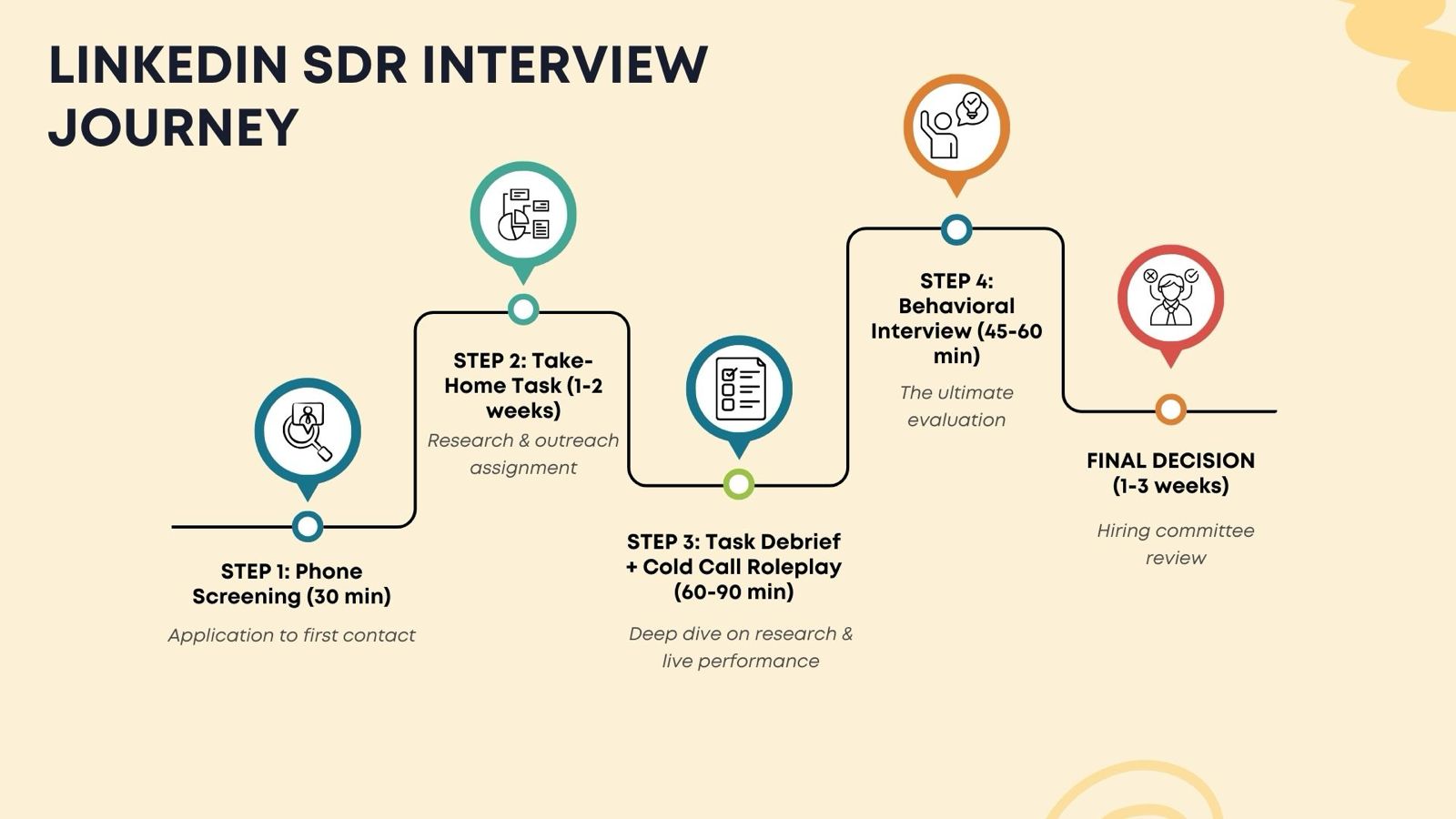
The LinkedIn SDR interview spans 3-4 weeks, comprising four stages that evaluate research skills, coachability, and strategic thinking.
Phone Screening (30 minutes)
HR evaluates communication clarity, enthusiasm, and whether you've researched LinkedIn's Talent Solutions and Sales Solutions. Explain yourself concisely in 3 minutes.
Prep: Research LinkedIn's products and practice explaining your sales interest clearly.
Take-Home Task (1-2 weeks)
Identify 2-3 ideal customer profile companies, write a cold email, and prepare a cold call script. Hiring managers want genuine research effort, not generic results.
Prep: Practice company research beyond surface-level. Identify industry-specific pain points.
Task Debrief with Cold Call Roleplay (60-90 minutes)
Task Walkthrough: Manager discusses your research and email approach.
Sample Question: "Walk me through why you chose these companies and identified these prospects."
Cold Call Roleplay: Manager acts as prospect. You make a mock call, and they give feedback mid-call, testing your adaptability.
Sample Scenario: "Call me as a VP of Sales at a mid-market tech company. I'm skeptical."
Key: Coachability matters more than perfection. Your response to feedback determines success.
Behavioral Interview (45-60 minutes)
This final round uses STAR-method questions to evaluate grit, collaboration, and metrics orientation.
Sample Questions:
- "Tell me about a time you faced repeated rejection. How did you stay motivated?"
- "Describe a situation where you received critical feedback. What did you do with it?"
- "Walk me through a time you had to hit an aggressive goal with limited resources."
- "Give me an example of when you turned a 'no' into a 'yes' through persistence."
What LinkedIn Looks For
Strategic Thinking: 2026 SDRs are pipeline architects, not dialers. Demonstrate research depth and quality relationship-building.
Coachability: Adaptability matters more than perfection. Show you implement feedback and adjust your approach.
BANT Framework: Budget, Authority, Need, Timing. Learn this qualification framework before interviews.
Preparation Strategy
Research
Study LinkedIn's Recruiter, Sales Navigator, and Learning solutions. Know their ICP.
Cold Calling
Practice three parts: Opening with permission, Value Statement, Clear Ask. Stay conversational.
STAR Stories
Prepare 8-10 examples with quantifiable outcomes covering rejection, feedback, achievements, and collaboration.
Interview Tips
- Replace generic answers with specifics. Say "I hit 125% quota focusing calls 9-11am" not "I'm a hard worker."
- Ask about success metrics, ramp timelines, SDR-to-AE collaboration. No questions signals disinterest.
- Expand yes/no answers with context.
Prep tip: Practice answering these with InterviewBee's AI interviewer to refine your STAR responses before the real interview.
After the Interview
Send a thank-you email within 24 hours referencing a specific conversation moment.
Role Expectations
LinkedIn SDRs earn $50-60K base with $75-85K OTE (65-70% base split). Expect 6-12 weeks ramp with monthly quotas of 8-12 qualified opportunities.
Success Factors
- Treat interviews like a sales cycle you're selling yourself. Ask discovery questions and close by asking next steps. Show sales energy.
- Learn more about SDR responsibilities at LinkedIn.
- Key: Own failures without excuses. Discuss learnings. Wait for the offer stage to negotiate salary.
Frequently Asked Questions
Frequently Asked Questions
How many rounds are in the LinkedIn SDR interview?
The LinkedIn SDR interview consists of 4 stages: Phone Screening (30 minutes with HR), Take-Home Task (1-2 weeks to complete), Task Debrief with Cold Call Roleplay (60-90 minutes), and Behavioral Interview (45-60 minutes). The entire process takes 3-4 weeks from initial contact to final decision, with hiring committee review adding 1-3 weeks after your final interview.
What is the cold call roleplay in the LinkedIn SDR interview?
During Stage 3, the hiring manager acts as a skeptical prospect while you perform a live cold call using your prepared script. They'll give you coaching feedback mid-call to test your adaptability. The key evaluation factor is coachability, not perfection—how you respond to real-time feedback matters more than flawless execution. Practice the three-part structure: Opening with permission, Value Statement, and Clear Ask.
What should I include in the LinkedIn SDR take-home task?
You'll need to identify 2-3 ideal customer profile companies, write a personalized cold email to a specific prospect, and prepare a cold call script for roleplay. Hiring managers want genuine research effort showing you understand the prospect's pain points and industry—not generic internet results. Go beyond surface-level information and demonstrate strategic thinking about why these companies fit LinkedIn's customer profile.
How much do LinkedIn SDRs make?
LinkedIn SDRs earn a base salary of $50,000-$60,000 with On-Target Earnings (OTE) of $75,000-$85,000, using approximately a 65-70% base and 30-35% variable split. The role requires conducting 40-60 daily outbound activities and scheduling 8-12 qualified meetings monthly for Account Executives. Expect a 6-12 week ramp period before reaching full productivity and quota expectations.
What is the most important skill for LinkedIn SDR interviews?
Coachability is the most critical skill for LinkedIn SDR interviews in 2025. Hiring managers prioritize candidates who adapt to feedback, ask clarifying questions, and implement suggestions immediately. During the cold call roleplay, they're specifically watching how you respond to coaching mid-call, not whether you execute perfectly. Prepare 8-10 STAR stories demonstrating how you've received critical feedback and turned it into improvement in previous roles.