



Video Interview Stress Guide: 10 Methods to Overcome Fear
- Author: Anindita Ghosh
- Published On: Sep 10, 2025
- Modified Date: Oct 27, 2026
- Category:Interview Guide
The era of remote work has fundamentally transformed how we approach job interviews, but it's come with an unexpected psychological cost. Recent research reveals a startling truth: video interview stress has intensified dramatically, with candidates experiencing 47% higher anxiety levels during virtual interviews compared to traditional in-person meetings, creating what experts now call the "remote interview anxiety epidemic."
The Biological Reality of Video Interview Stress
Video Interview stress isn't just psychological – it's measurably affecting your body. Studies using digital job interview scenarios have shown concrete biological evidence: participants experienced peak cortisol levels within 5 minutes of virtual interviews, significantly earlier than the typical 20-minute response pattern observed in face-to-face interactions.
Because stress can peak as the call starts, focus on avoiding interview rejection in the first 4 minutes by settling your nerves and establishing a confident tone from the beginning.
The science behind this phenomenon is compelling. EEG studies reveal that video meetings cause measurable brain fatigue after just 20 minutes, with participants showing marked cognitive decline during 50-minute virtual sessions compared to in-person equivalents. This biological response explains why many candidates feel drained and anxious during remote interviews.
The 62% Technical Difficulty Factor
Beyond biological responses, technical difficulties plague 62% of virtual interviews, creating a perfect storm for anxiety. The most common issues include:
- Connection problems: 78.4% of technical difficulties
- Audio/video quality issues: 16.4% of problems
- Platform compatibility failures: An additional 15-20% of unreported issues
These technical disruptions don't just cause momentary frustration – they trigger compounding anxiety effects where technical fears amplify existing video interview stress, leading to performance decline that can last throughout the entire interview process.
Letting technical problems trigger rambling or disorganization can lead to the same interview mistakes Fortune 500 recruiters reject seen in other high-pressure situations.
Gender and Demographic Patterns in Virtual Interview Anxiety
Research reveals interesting patterns in who suffers most from video interview stress. Women report 78% higher rates of discomfort in virtual environments, while younger candidates under 30 show higher baseline anxiety levels but adapt more quickly to technology. However, both men and women experience equal self-consciousness about their appearance during video calls, contributing to what psychologists call "Mirror Anxiety."
The Psychology Behind Zoom Interview Fear
Understanding how to be confident in an interview starts with recognizing the unique psychological triggers of virtual meetings:
Mirror Anxiety Effect: Constantly viewing yourself on screen diverts mental resources from interview content to self-evaluation, increasing stress levels and reducing performance quality.
This intense self-scrutiny can contribute to imposter syndrome making candidates freeze by prompting them to question their qualifications in real time.
Cognitive Overload: Processing multiple video feeds while monitoring your own appearance and managing technical concerns creates split attention that makes it harder to answer interview questions confidently.
Environmental Stressors: Home distractions, lighting concerns, and background anxiety compound the natural stress of job interviews.
Evidence-Based Solutions for Virtual Interview Success
The good news? Research shows that virtual mock interviews reduce anxiety by 95% among participants who practice regularly. Here are proven strategies to combat video interview stress:
Pre-Interview Preparation
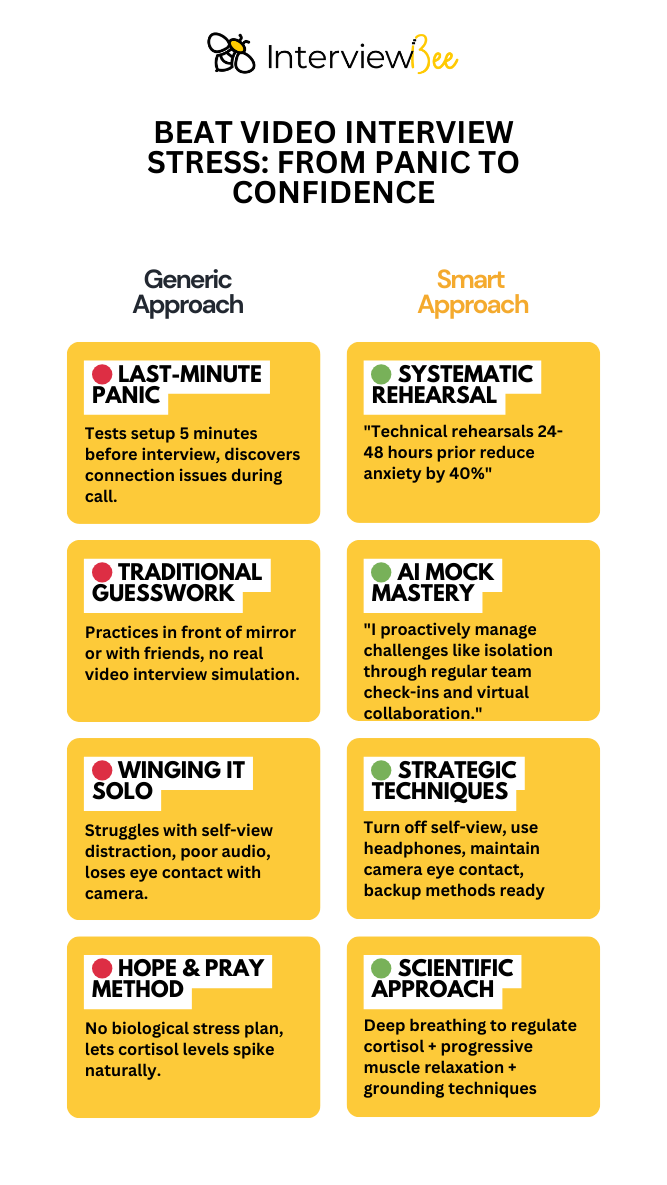
- Technical rehearsals 24-48 hours prior reduce technical anxiety by 40%
- Environment optimization (proper lighting, quiet space) improves confidence by 25%
- AI mock interview practice with platforms like InterviewBee that offer:
- Interactive voice sessions simulating real interview conversations for authentic practice
- Adaptive questioning where AI instantly adjusts follow-up questions to your unique responses
- Personalized preparation drawing from your CV and job description for role-relevant practice
- 100+ interview formats covering technical, behavioral, and HR screens built on expert frameworks
- In-depth session reports with instant analytics on clarity, communication, and answer structure
- Curated question bank with real interview questions and industry-specific scenarios
During-Interview Techniques
- Turn off self-view to eliminate Mirror Anxiety and reduce cognitive load
- Use headphones to improve audio quality and minimize echo concerns
- Maintain eye contact with the camera, not your screen image
- Have backup communication methods ready (phone, secondary device)
Biological Stress Management
- Deep breathing exercises pre-interview help regulate cortisol response
- Progressive muscle relaxation counters physical tension symptoms
- Grounding techniques manage acute anxiety during technical difficulties
Conclusion
The remote interview anxiety epidemic is real, measurable, and affecting millions of job seekers worldwide. With 47% higher anxiety levels in virtual interviews and 62% experiencing technical difficulties, candidates need scientifically-backed solutions to overcome these challenges.
InterviewBee emerges as the comprehensive solution specifically designed to combat virtual video interview stress. With features like voice-driven mock interviews, real-time AI assistance, and personalized preparation based on your CV and job description, the platform directly addresses both the biological and technical challenges identified in anxiety research.
Whether you choose InterviewBee's AI Mock Interview for realistic practice, the key lies in consistent preparation and strategic implementation of proven anxiety-reduction techniques.
Remember: virtual interview stress is a normal biological response to an unnatural situation. By understanding the science behind it and leveraging AI-powered preparation tools, you can transform your biggest interview challenge into your competitive advantage and join the thousands who have successfully overcome remote interview anxiety.