

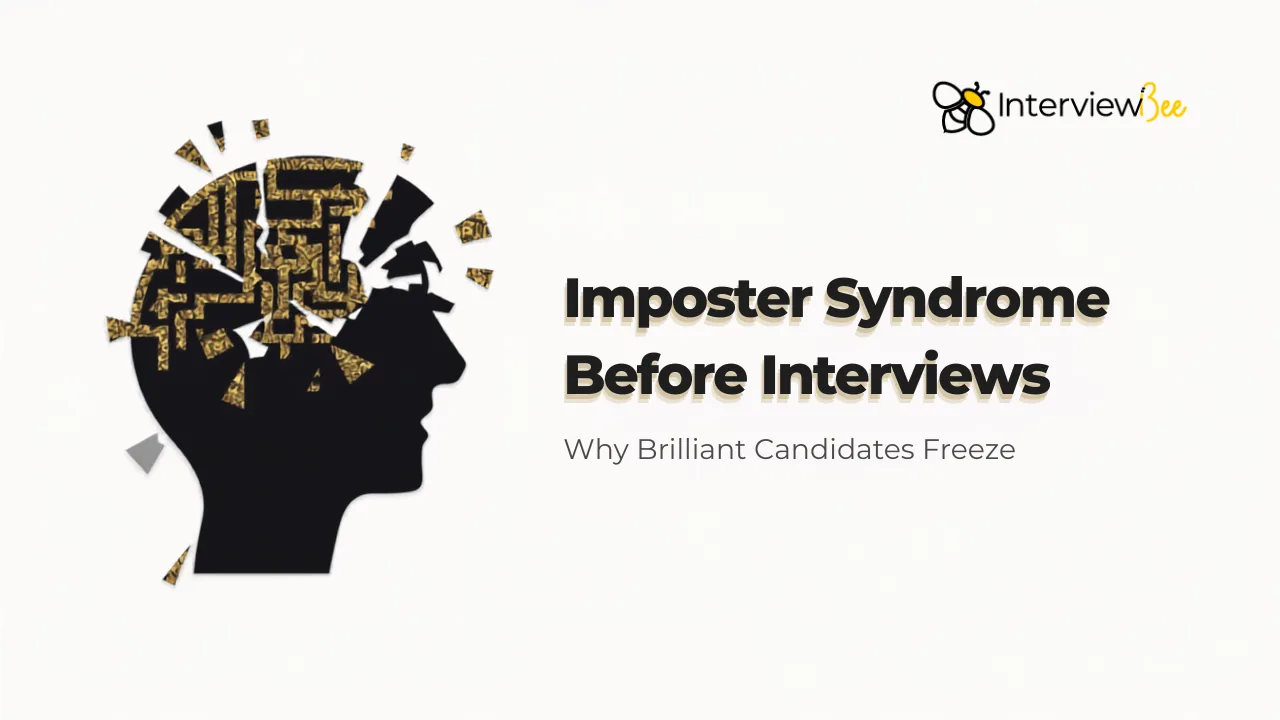
Imposter Syndrome Before Interviews: Why Brilliant Candidates Freeze and How Structured Practice Fixes It
- Author: InterviewBee Team
- Published On: Jul 17, 2026
- Category:Interview Tips
You knew the answer five minutes before the call. You'd explained the same concept to a study group without blinking, solved the practice problem cold, rehearsed your "tell me about yourself" in the mirror. Then the interviewer's face appears on screen, asks the first question, and something in your brain just... stops. You stumble through an answer you could have given in your sleep an hour ago.
That's not a knowledge gap. That's imposter syndrome job interview anxiety doing exactly what it does best — making a prepared person perform like an unprepared one.
It's Not What You Know. It's the Format You're Unfamiliar With
Imposter syndrome, first described by psychologists Pauline Clance and Suzanne Imes in the 1970s, isn't about actual competence — it's a persistent feeling that your competence is about to be exposed as fake. For recent grads, interviews are the perfect trigger: it's one of the few moments where your knowledge is being actively judged in real time, by a stranger, with a job on the line.
The brain treats this as a threat, not a quiz. And under threat, your nervous system pulls resources away from calm recall and toward fight-or-flight — which is exactly the opposite of what a clear, structured answer requires. This is why you can know the material perfectly and still blank: the problem was never stored knowledge, it was retrieving that knowledge under evaluative pressure you'd never actually practiced.
The Real Gap Is Rehearsal, Not Readiness
Most interview prep focuses on the wrong layer. Recent grads spend hours reviewing concepts, rereading notes, and mentally rehearsing answers — all silently, all alone, all without anyone asking a follow-up question they didn't expect. That builds knowledge. It doesn't build the specific skill an interview actually tests: talking through your reasoning out loud, in real time, while someone is listening and evaluating.
There's a meaningful difference between knowing something and hearing yourself explain it under mild pressure for the first time. If the first time you do that is in the actual interview, your brain is learning a brand-new skill in the highest-stakes moment possible. That's the setup for freezing — not a lack of preparation, but preparation aimed at the wrong target.
Why Structured Practice Closes the Gap
The fix isn't more studying. It's repeated exposure to the format itself, so the evaluative pressure stops registering as a threat. Athletes don't walk into a match having only visualized it — they scrimmage. Interview prep needs the same thing: practice reps where you're actually answering out loud, getting a follow-up question, and recovering from an imperfect first sentence, all in a low-stakes setting before it matters.
This is where structure beats improvisation. Practicing with a friend is better than nothing, but friends rarely push you the way a real interviewer does, and they can't tell you where your delivery actually falls apart. What works is a practice format that mirrors the real pressure — adaptive follow-ups, a range of role-specific scenarios, and honest feedback on where your answer lost clarity — repeated enough times that the format itself becomes familiar instead of threatening.
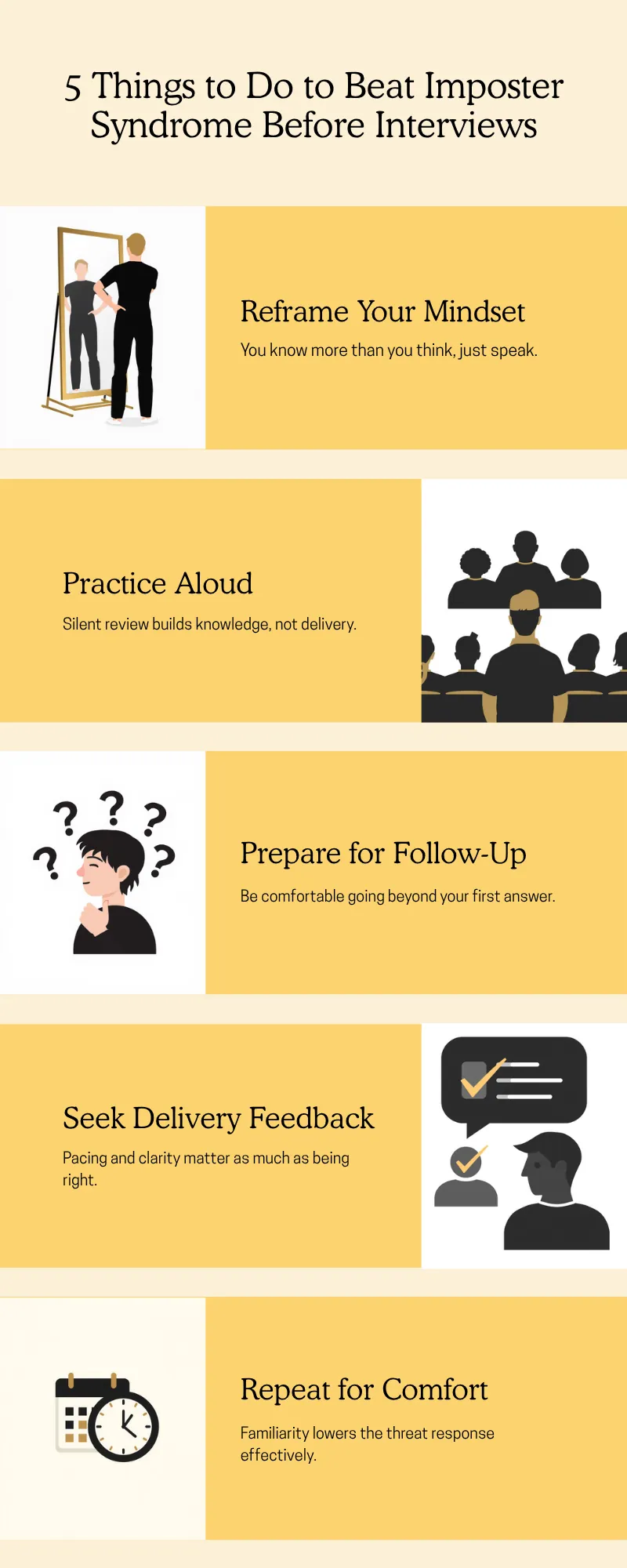
That's exactly what InterviewBee's Mock AI Interviewer is built for. It asks real interview questions out loud, adapts its follow-ups based on your answers the way a real interviewer would, and gives you direct feedback on pacing, clarity, and structure — not just whether the content was right. The goal isn't to memorize more answers. It's to make the experience of being asked a hard question, live, feel routine instead of threatening, so your prepared knowledge can actually come out when it counts.
If you've been over-preparing on content and still freezing in the room, the gap probably isn't what you know — it's how many times you've practiced saying it under real pressure.
Practice this with InterviewBee's AI mock interviewer — free to start.