


Campus Recruiting in 2026: What Students Targeting Big Tech Actually Need to Do Differently
- Author: InterviewBee Team
- Published On: Jun 19, 2026
- Category:Campus Recruiting
Many students begin thinking seriously about Big Tech recruiting in their final year. They polish a resume, browse LinkedIn, and apply when internship postings appear. By then, they may be competing with candidates who prepared their projects, profiles, and interview stories months earlier.
Campus recruiting does not follow one universal calendar. Timelines vary by company, team, role, country, and hiring need. The practical lesson is simple: prepare before postings appear and monitor official careers channels throughout the year.
The Campus Recruiting Timeline Students Often Miss
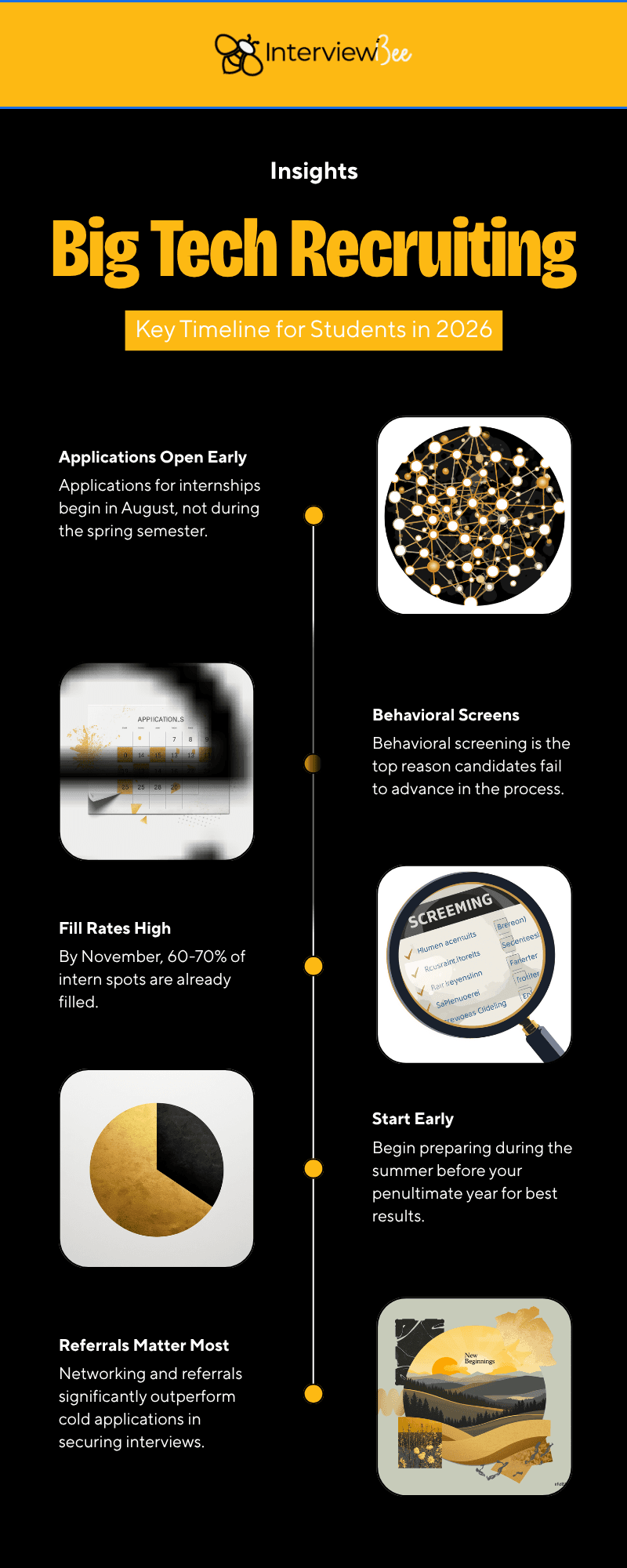
Many large technology employers begin advertising at least some internships and early-career roles in late summer or early autumn for the following year. Other teams recruit later or reopen roles as headcount changes.
If you wait until spring to prepare, you may miss early openings or rush through applications without a strong resume and practiced interview examples. Treat campus recruiting as a year-round process rather than a final-semester sprint.
The summer before your penultimate year is a useful preparation checkpoint. Use it to strengthen your resume, finish a credible project, set job alerts, research target teams, and begin interview practice.
What Strengthens a Student Application
GPA may be a screening factor for some roles, but it is rarely the only signal. Recruiters and hiring teams need to understand quickly what you built, how you contributed, and what changed because of your work.
Make Projects and Experience Easy to Scan
Your resume should include at least one project, internship, research contribution, or team experience that demonstrates meaningful work. Describe the problem, your contribution, the constraints, and the outcome. A list of technologies without context is harder to evaluate.
Build Genuine Recruiting Connections
University events, recruiter outreach, alumni conversations, and employee referrals can help candidates discover roles and understand teams. Use these channels to learn and build authentic relationships—not to bypass qualifications or official application requirements.
Prepare for Behavioral Screens
Technical preparation alone is not enough. Students should be ready to discuss collaboration, disagreement, initiative, setbacks, and learning with specific examples. Practice explaining what you personally did and what you would do differently.
Show Interest in the Actual Work
Generic praise for a famous company does not explain why you fit a role. Research the team, product area, or technical problem described in the posting and connect it honestly to your skills and interests.
Build Interview Readiness Before Applications Open
Reading interview guides and thinking silently about answers does not reproduce the pressure of a live conversation. Speaking aloud reveals unclear structure, missing context, and answers that sound memorized.
Voice-based mock interviews help you practice responding, adapting to follow-up questions, and improving the structure of each answer. InterviewBee's AI mock interviewer offers role-specific scenarios, adaptive follow-ups, and structured feedback that you can use before your recruiting window begins.
What to Do Now
- Rewrite your resume around outcomes and make every project easy to understand.
- Set alerts on official careers sites and relevant university recruiting channels.
- Update your LinkedIn profile to reflect the roles and skills you are building toward.
- Attend relevant virtual or campus events and engage with thoughtful questions.
- Prepare behavioral stories and practice answering aloud before applications open.
Practice with InterviewBee's AI mock interviewer—free to start.
Campus recruiting rewards preparation and timing. Begin early enough to make deliberate improvements instead of trying to rebuild your application during an active interview process.
Frequently Asked Questions
When should students start preparing for Big Tech campus recruiting?
Start during the summer before your penultimate year, or earlier. Prepare your resume, projects, alerts, and interview stories before applications appear.
When do Big Tech internship applications usually open?
Some technology companies post roles in late summer or early autumn, while others recruit later. Monitor each employer's official careers site because timelines vary.
Does GPA matter for Big Tech internships?
It can be one screening factor, but projects, relevant experience, technical fundamentals, communication, and role fit also matter.
How can a student improve their chances of getting shortlisted?
Use an outcome-focused resume, build credible projects, engage with recruiting channels, apply promptly, and prepare for both technical and behavioral evaluation.
How should students prepare for behavioral interviews?
Prepare specific stories about collaboration, conflict, initiative, failure, and learning. Practice aloud and rehearse detailed follow-up questions.