
Reliability and resilience
Interviewers want evidence that you think about uptime, rollback safety, failure recovery, and how systems stay healthy under stress.
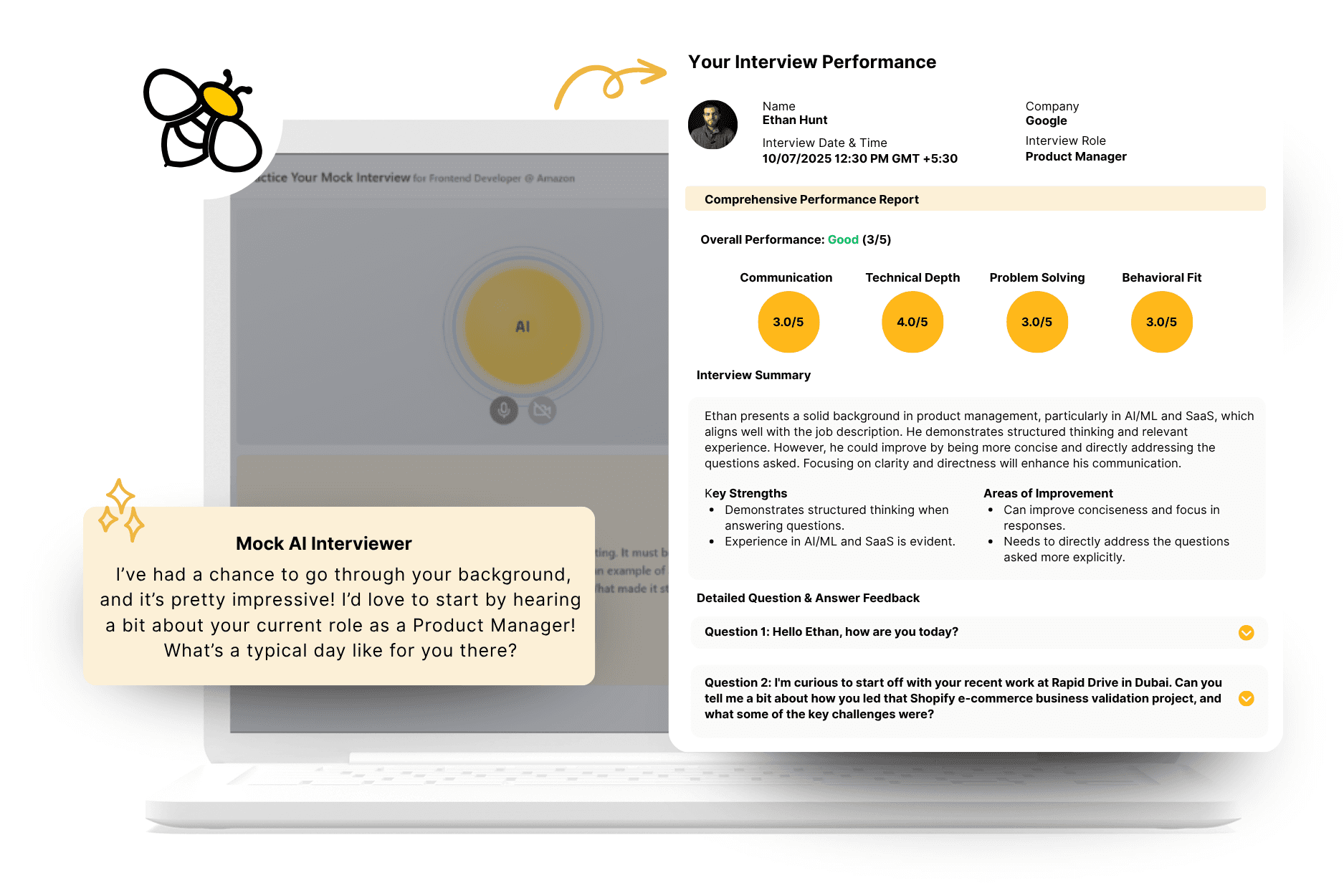
Sharpen role-specific prep, reliability mindset, automation judgment for Site Reliability Engineer interviews. Start with mock practice, then use Live AI Interview Assistant for real-time support in live interview rounds.
Site Reliability Engineer Interview
Site Reliability Engineer interview guide
Interviewers want evidence that you think about uptime, rollback safety, failure recovery, and how systems stay healthy under stress.
Strong DevOps answers show you know when to automate, how to reduce manual risk, and how to create repeatable workflows that actually improve delivery...
Expect questions about logs, metrics, tracing, alerting, and how you use signals to detect, diagnose, and resolve issues effectively.
You should be able to explain build pipelines, infrastructure choices, container patterns, and how you balance speed, cost, and maintainability.
DevOps interviews often look for calm communication during failure scenarios, not just technical correctness.
Prep playbook
Whenever you describe a solution, explain how it affects reliability, deployment safety, team velocity, and the blast radius of failure.
Strong stories include outages, deployment failures, scaling issues, or brittle processes that you fixed with better automation or observability.
Naming Kubernetes, Terraform, or pipelines is not enough.
Interviewers often learn the most from how you reason through an outage, misconfiguration, or latency spike under time pressure.
Avoid these
Answering infrastructure questions as pure tooling trivia without discussing risk or reliability.
Ignoring monitoring, rollback, or incident response in deployment answers.
Describing automation as speed-only instead of also reducing operational risk.
Giving cloud answers that never mention cost, maintainability, or team impact.
5 practice questions for Site Reliability Engineer interviews
Suggested answers
Selected question
Walk me through how you’d design an incident response for a production outage where error rate spikes and latency increases within 5 minutes.
Quick answers about practice, live support, and suggested answers.
Most interviewers hiring for Site Reliability Engineer roles evaluate reliability, automation, observability, and cloud delivery judgment. Strong candidates sound role-specific, structured, and practical rather than broad or overly theoretical.
Build preparation around the role's real decision points. Practice incident response, CI/CD, infrastructure trade-offs, and reliability engineering scenarios, prepare measurable examples from your experience, and rehearse concise explanations that show judgment, trade-offs, and clear communication.
Yes. This page starts with AI-generated Site Reliability Engineer questions and concise suggested answers that are already visible on load. You can then load more questions in real time as you continue practicing.
Yes. Many candidates use mock interviews first to tighten their structure, then keep Live AI Interview Assistant available when the real interview starts. practice your response structure in mock mode and rely on live assistance when follow-ups get more operational.
No. The suggested answers are concise guidance bullets designed to keep the panel easy to scan. They help you understand what a stronger answer should include without replacing your own wording or judgment.
Continue practising with related roles and companies, or browse the full mock interview directory.
Run a tailored mock interview first, then keep live assistance ready for the real conversation.