


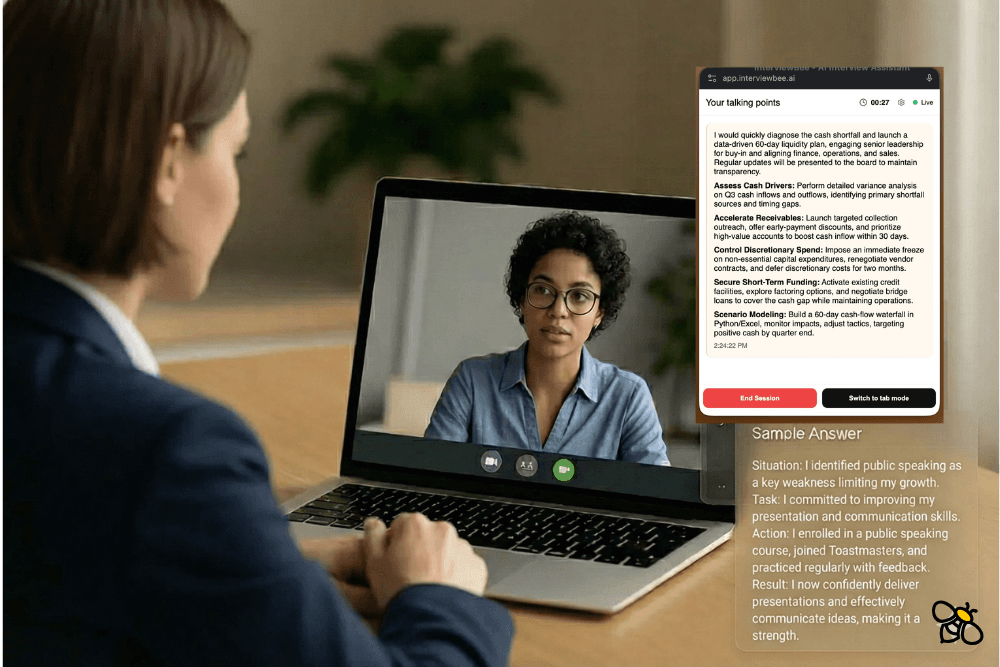
The Future of Job Prep: Top Features Powering Today's AI Interview Copilots
- Author: Bismayy
- Published On: Dec 13, 2025
- Category:Interview Tips
You've polished your resume. Researched the company. Rehearsed your elevator pitch in the mirror.
Then the interviewer asks something unexpected, and your mind goes blank. Happens to everyone.
That's exactly why AI interview copilots are blowing up right now. But not all of them work the same, and some are genuinely useless. Here's what to look for if you're shopping for one.
1. Real-Time Prompts (Under 3 Seconds)
Latency kills. If an AI takes 5-6 seconds to respond, you're already sitting in awkward silence.
The best copilots generate talking points in under 2 seconds. Tools like InterviewBee's Live AI Assistant are built around this, speed that actually matches conversation pace.
As Aline Lerner, founder of interviewing.io, has noted in her research: "Most candidates fail not because they lack knowledge, but because they freeze under pressure." Fast AI prompts help bridge that gap.
2. Stealth Mode for Screen Sharing
Here's where many tools fail completely.
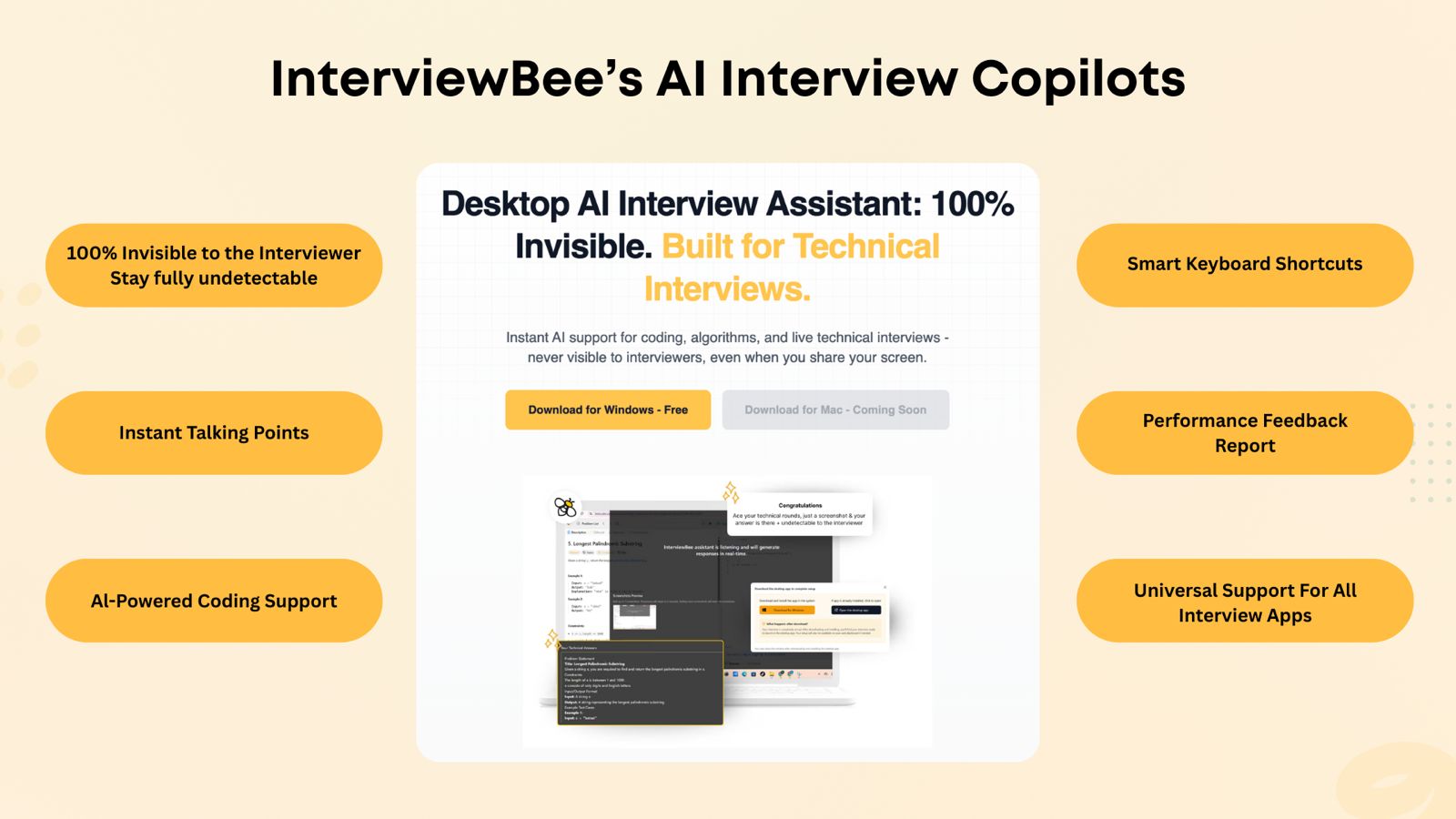
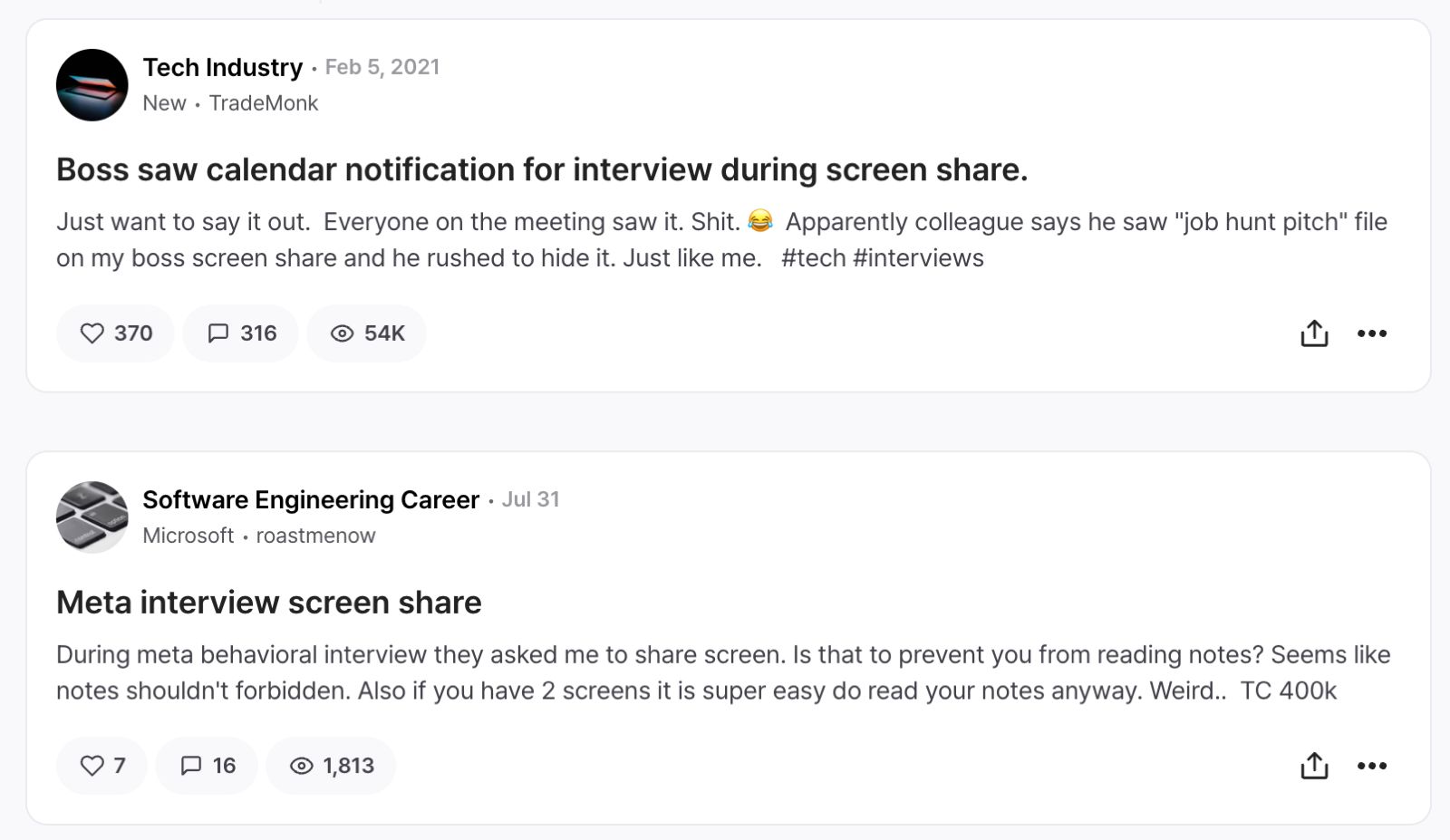
If you're on Zoom or Teams and need to share your screen, your copilot can't just sit there visible to your interviewer. You need invisible operation, overlays that disappear from screen capture.
InterviewBee's Desktop AI Assistant offers a stealth mode designed exactly for this. It stays invisible during screen share, even in technical coding rounds.
3. Voice-Based Mock Interviews
Reading sample questions isn't practice. Talking out loud under time pressure is.
Look for AI mock interviewers that use actual voice interaction, not just text boxes. The best ones adapt their follow-up questions based on your answers, mimicking real interview dynamics.
Rahul Pandey from Jointaro wrote on his blog: "System design interviews fail candidates not because they can't design, but because they can't communicate their design under pressure." Voice practice fixes that.
4. Resume + JD Personalization
Generic answers sound generic. Your AI should pull from your uploaded resume and the job description to craft responses that sound like you.
This means referencing your actual projects, past companies, and relevant skills, not cookie-cutter templates.
InterviewBee's Mock AI Interviewer does this automatically: upload your CV and JD, and the AI tailors every question and suggested response.
5. Post-Interview Analytics
Did you ramble? Pause too long? Miss a key point?
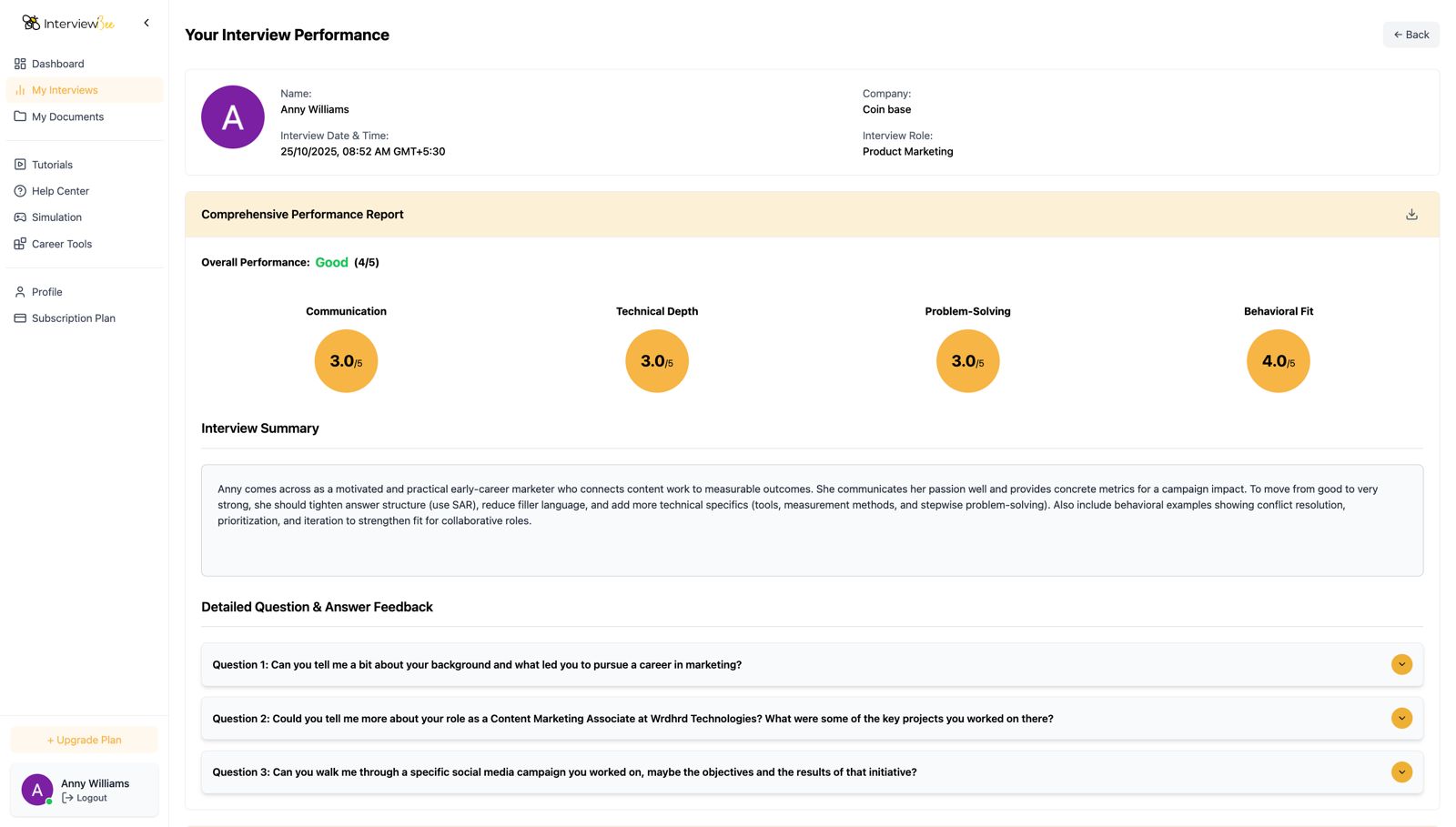
Good copilots offer performance reports after mock sessions, highlighting weak spots so you can fix them before the real thing.
What to Skip
Avoid tools that:
- Rely only on text chat (no voice)
- Don't work across Zoom, Meet, and Teams
- Can't handle technical/coding interviews
- Offer no privacy during screen share
Final Thought
The interview game has changed. The question isn't whether to use AI support,it's which features actually help you perform under pressure.
Look for speed, invisibility, voice practice, personalization, and analytics. Skip the rest.
External Resources:
- Harvard Business Review: Job Interviews Topic , research on interview psychology
- U.S. Bureau of Labor Statistics: Employment Projections , context on competitive job markets