



Google Leadership and Googleyness Interview Questions
- Author: Bismayy
- Published On: Nov 22, 2025
- Category:Interview Tips
Getting hired at Google takes more than solving LeetCode problems. Their acceptance rate is lower than Harvard's, and the interview process is designed to test how you think, how you collaborate, and whether you’ll make the team around you better. Two qualities matter more than anything else: Google’s leadership principles and Googleyness.
If you are interviewing at Google, knowing what these terms mean and how to talk about them matters. Here's what they are actually looking for.
What Are Google’s Leadership Principles?
Google's leadership framework originated from Project Oxygen, Google's long-running internal research initiative aimed at identifying what makes effective managers. The research revealed key behavioral principles that now guide hiring decisions across all levels, including even individual contributor roles.
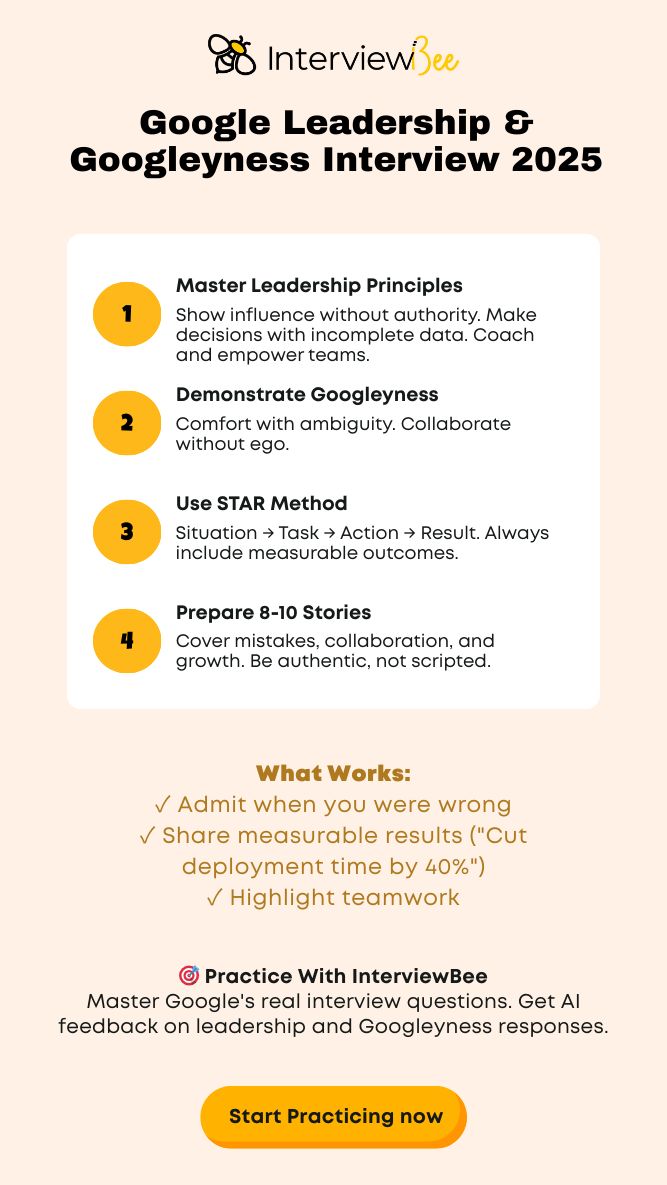
Google does not tie leadership to job titles. Even as a software engineer, you are expected to show emergent leadership, influencing others, collaborating across teams, and getting things done without being anyone's boss.
The principles cover things like coaching, empowering others, clear communication, and solid decision-making. What Google actually cares about is seeing examples of you doing these things, not hearing you list them out.
What Is Googleyness?
Googleyness is how Google measures cultural fit. It has evolved past the stereotypical perks and now focuses on specific traits: intellectual humility, comfort with ambiguity, collaboration, and conscientiousness.
According to Google's hiring philosophy, they want people who handle uncertainty well, work across diverse teams, and can bring new ideas without dismissing what already works. In other words: contribute and collaborate without ego.
Sample Questions You’ll Actually Face
Leadership Questions:
- “Tell me about a time you influenced a team without having formal authority.”
- “Describe a situation where you had to decide with incomplete information.”
- “How have you handled conflict within a team?”
Googleyness Questions:
- “Tell me about a time you learned something from someone junior to you.”
- “Describe a project where you had to collaborate with someone whose working style differed from yours.”
- “Share an example of when you changed your mind about something important.”
How to Structure Your Answers (So They Land at Google)
Use the STAR method for behavioral questions:
- Situation – Set the context briefly
- Task – What you were responsible for
- Action – Specific steps you took
- Result – What happened, with numbers if possible
One thing to know: Google interviewers dig deeper than your initial answer. They will ask follow-ups like "What would you do differently?" or "How did your teammates react?" Don't just memorize a story; understand it well enough to discuss it from different angles.
What Actually Works in These Interviews
Admit when you were wrong. Talk about mistakes and what you learned. Google wants people who learn and adapt, not people who pretend they're always right.
Talk about results, not just work. Saying "I worked really hard" doesn't land. Saying "I cut deployment time by 40% with automated testing" does.
Mention collaboration. Even if you solved something yourself, bring up how you got input from others or shared what you learned. Google's environment genuinely runs on teamwork.
Red Flags to Avoid
Never badmouth previous employers or teammates. Don't claim all credit for team wins. Avoid vague answers like "I am a team player" without concrete examples. And please, don't memorize scripted responses. Google interviewers can spot rehearsed answers instantly.
How to Prepare
Pull together 8-10 stories from your work history that show different leadership traits. Practice telling them naturally, not like you're reading a script. Look up Google's recent initiatives around DEI and sustainability, since cultural fit matters in these interviews.
Be yourself. Google trains interviewers to spot authenticity versus polish. They would rather see how you actually think through problems than watch you perform a rehearsed routine.
The interview process is tough but straightforward. They are not just checking if you can do the work, they are asking if you'll make the teams around you better. That is what these leadership and Googleyness questions are really about.
For more insights on tech interview preparation, check out resources from Glassdoor's interview insights and levels.fyi career guidance.
Get Practice That Actually Helps
Reading about this stuff is different from doing it under pressure. Most people struggle when they have to tell their stories live in an interview and get follow-up questions they didn't expect.
InterviewBee has a Google question bank with the leadership and Googleyness questions that actually come up in interviews. The AI interviewer asks questions and evaluates how you answer, not just what you say, but whether you are showing the traits Google looks for or just listing things you did.
You get feedback on your answers in real-time. If you are being vague about your role on a team project, it tells you. If your STAR story lacks impact, you will know before the actual interview.
The platform covers technical rounds and behavioral questions, so you can practice the full range of what Google will ask. When interview day comes, you will know what to expect and how to handle it.