


Coding Bootcamp Job Placement: What Works in 2025
- Author: Bismayy
- Published On: Nov 14, 2025
- Category:Interview Tips
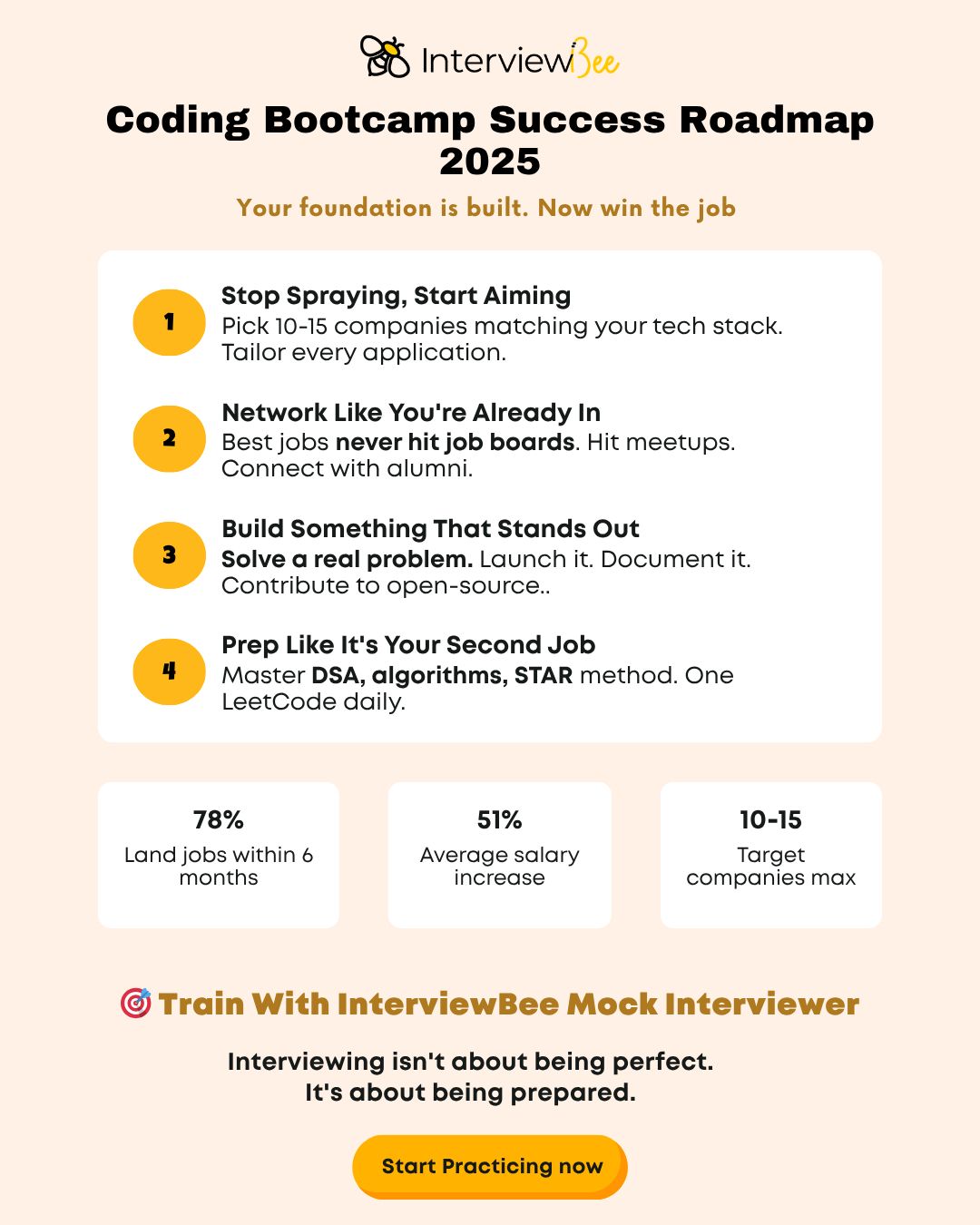
Coding bootcamp job placement success isn't automatic - 78% of bootcamp grads land jobs within six months, with salaries jumping by 51% on average. But none of that happens by default. What you do after graduation determines everything. The bootcamp gives you a foundation. What you build on it is up to you.
Step 1: Stop Spraying, Start Aiming
Most grads apply everywhere. It feels productive. It's not.
Pick 10–15 companies whose tech stack matches what you learned. React? Target React shops. Python? Go for Django or Flask. Tailor every single application. Reference their product. Highlight the bootcamp project that solves a similar problem.
Track it all: company name, job link, who you contacted, when you followed up. It's your personal CRM now.
Step 2: Network Like You're Already in the Industry
Because the best jobs? They never hit job boards.
Find local tech meetups. Go even when you feel underqualified—especially when you feel underqualified. On LinkedIn, connect with alumni from your bootcamp. Message them. Ask what worked. Most are eager to help.
Engage with developers at your target companies. Not spam. Real, thoughtful comments. Show you're not just another applicant, you're already part of the conversation.
FreeCodeCamp's bootcamp job guide is clear: strategic networking outperforms cold applying for coding bootcamp job placement. Every. Time.
Step 3: Build Something That Doesn't Blend In
Bootcamp portfolios look the same. You need a project that doesn't.
Build something that solves a real problem you've faced. Launch it. Document it. Put it on GitHub. Explain the trade-offs you made. Write a blog post about the bugs that almost broke you.
Better yet, contribute to open-source. Even fixing a typo in docs shows initiative. It says, "I don't wait to be told."
Step 4: Prep Like Interviews Are Your Second Job
Bootcamps teach building. Interviews test thinking.
Software engineer interview preparation requires more than coding skills. Brush up on data structures, algorithms, and whiteboard logic. One LeetCode or HackerRank problem a day is enough. Focus on consistency.
Don't ignore behavioral questions. Prepare 5–6 stories from your bootcamp experience using the STAR method (Situation, Task, Action, Result). Use them to show how you solve problems under pressure.
Train with the Tool That Trains You Back
Interviewing isn't about being perfect. It's about being prepared. That's where InterviewBee Mock Interviewer comes in:
- Technical mock interviews on DSA, algorithms, and real coding challenges
- Behavioral practice with feedback on your STAR stories
- Live simulations that feel like actual screens, not just practice problems
- Instant feedback on your thinking, code, and communication
Plus: resume templates, GitHub portfolio guides, and everything bootcamp grads need to present like pros.
You did the bootcamp. Now win the job. InterviewBee helps you sharpen the skills that interviews actually test.