



Can Recruiters Detect AI-Written Resumes?
- Author: Bismayy
- Published On: Feb 07, 2026
- Category:Interview Tips
Can Recruiters Detect AI-Written Resumes? The Truth You Need to Know in 2026
Can recruiters detect AI-written resumes? This question is becoming increasingly common as more job seekers turn to tools like ChatGPT and other AI resume builders to speed up the application process. In a competitive job market, using AI feels like a smart shortcut. But here is the real concern. If recruiters can tell your resume was written by AI, it could hurt your chances rather than help them.
AI-written resumes are not automatically bad. In fact, many recruiters accept and even expect some level of AI assistance. The problem arises when resumes feel robotic, generic, or disconnected from real human experience. This blog explains how recruiters actually review resumes, whether AI detection is reliable, and how you can safely use AI while keeping your resume natural, authentic, and SEO friendly.
How Recruiters Review Resumes Today
Recruiters rarely read resumes line by line at first glance. Most resumes first go through an Applicant Tracking System, commonly known as ATS. These systems scan resumes for keywords, skills, job titles, and formatting before a human ever sees them.
Once a resume reaches a recruiter, they look for clarity, relevance, and authenticity. They want to see real accomplishments, consistent career progression, and language that reflects genuine understanding of the work performed.
What Recruiters Care About Most
Recruiters focus on:
- Clear job titles and timelines
- Measurable achievements
- Role specific skills
- Industry relevant language
- A natural, human writing style
They are not actively hunting for AI usage. They are very good, however, at spotting resumes that feel overly polished but lack substance.
Can Recruiters Actually Detect AI-Written Resumes?
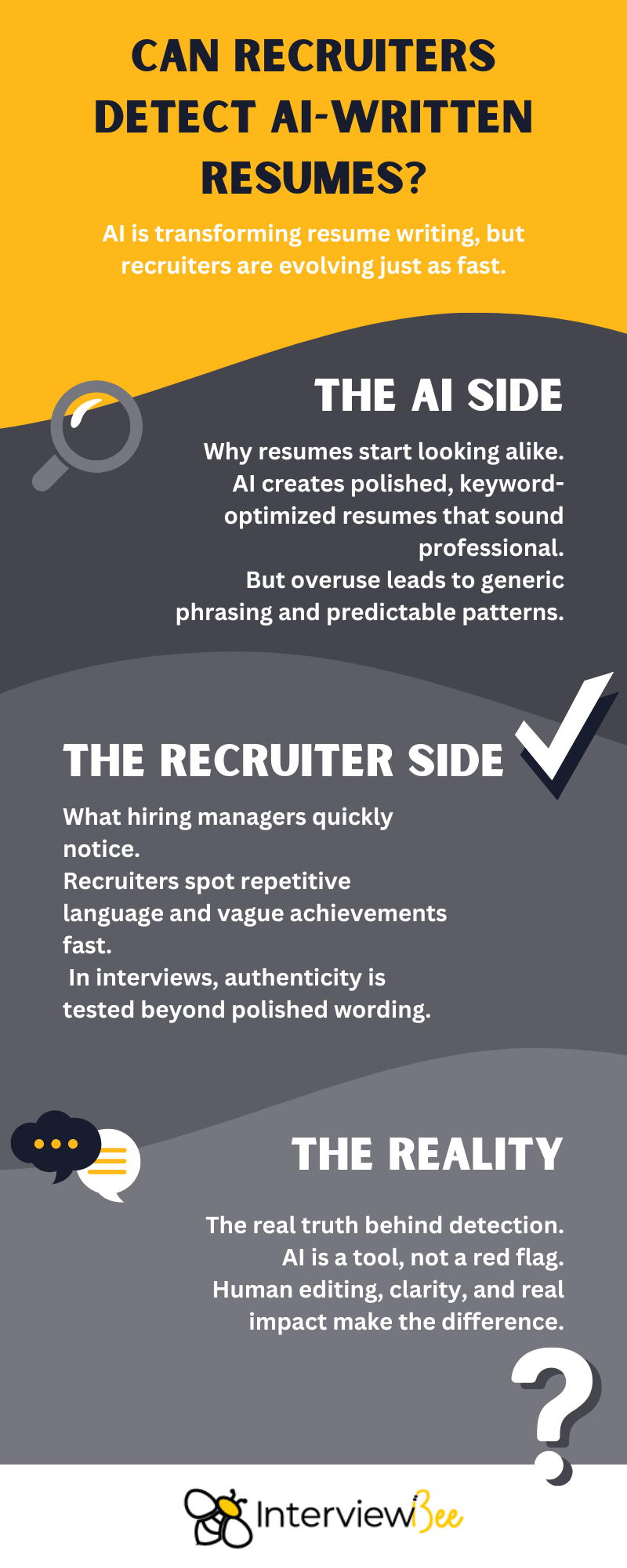
There is no reliable way for recruiters to definitively detect whether a resume was written by AI. Detection tools exist, but they are inconsistent and often inaccurate. Many human-written resumes get flagged as AI, while many AI-generated resumes pass unnoticed.
Most recruiters rely on instinct rather than software. If a resume feels generic, vague, or disconnected from real experience, it raises questions.
Common red flags recruiters associate with AI-heavy resumes include:
- Repetitive phrasing across sections
- Overly formal or textbook language
- Buzzwords without context
- Perfect grammar but weak storytelling
- Generic achievements without numbers
Do Companies Use AI Detection Tools for Resumes?
Most companies do not use AI detection tools during hiring. These tools are more common in academic or content moderation settings and often create more problems than they solve in recruitment.
Instead, recruiters verify resumes by asking follow-up questions, checking LinkedIn consistency, and evaluating how confidently candidates explain their experience during interviews.
Why Poorly Written AI Resumes Get Rejected
The biggest risk of AI-written resumes is not detection. It is generic content. When dozens of resumes sound the same, recruiters quickly lose interest.
Statements like “worked in a fast-paced environment” or “handled multiple responsibilities” fail to show real impact. Strong resumes highlight outcomes, decisions, and results.
What Recruiters Really Care About
Recruiters care far more about authenticity than the tools you used. AI can help with structure and clarity, but resumes perform best when they include role-specific detail, measurable results, and a natural professional tone.
If you can clearly explain your work and defend every line on your resume, AI assistance becomes irrelevant.
FAQs
Do I need coding experience to answer AI skills assessment questions?
Not necessarily. Many AI interview questions focus on how you use AI tools, evaluate outputs, and think critically about applications. Product managers, marketers, and business analysts regularly pass these assessments without writing code.
How do I prepare if I've never worked with AI tools professionally?
Start with personal projects. Use tools like ChatGPT or Claude to summarize documents, draft emails, or analyze data. Interviewers care about your approach and what you learned, not where the work happened.
What if I don’t know the answer to a technical AI question?
Say so, then explain how you would find the answer. Honest curiosity paired with a learning process is valued more than guessing.
Are AI skills assessment questions the same across industries?
Core themes stay consistent, but examples change. Healthcare focuses on privacy. Fintech emphasizes risk and fraud. Tailor your answers to the industry.
How long should my answers be during an AI skills assessment?
Aim for 60 to 90 seconds. Structure your response with context, action, and results. Clear and concise answers signal strong communication skills.
Can recruiters actually tell if a resume is written by AI?
Most recruiters cannot reliably tell. What they notice is whether the resume sounds generic or lacks real detail. Well-edited AI-assisted resumes rarely raise concerns.
Do applicant tracking systems detect AI-written resumes?
No. ATS systems only scan for keywords, formatting, and relevance. They do not analyze how the text was created.
Is it bad to use AI tools to write a resume?
Not at all. AI is widely used for structure and optimization. Problems arise only when candidates submit unedited or misleading content.
How can I make an AI-assisted resume sound more human?
Add real numbers, specific examples, and rewrite sections in your own voice. Remove buzzwords and tailor each resume to the role.